


Bruce McArthur murdered eight men connected to Toronto’s Gay Village. Here’s what happened, who the victims were, and why the case still matters to LGBTQ+ communities.
This article discusses murder, missing persons and violence affecting members of the LGBTQ+ community.
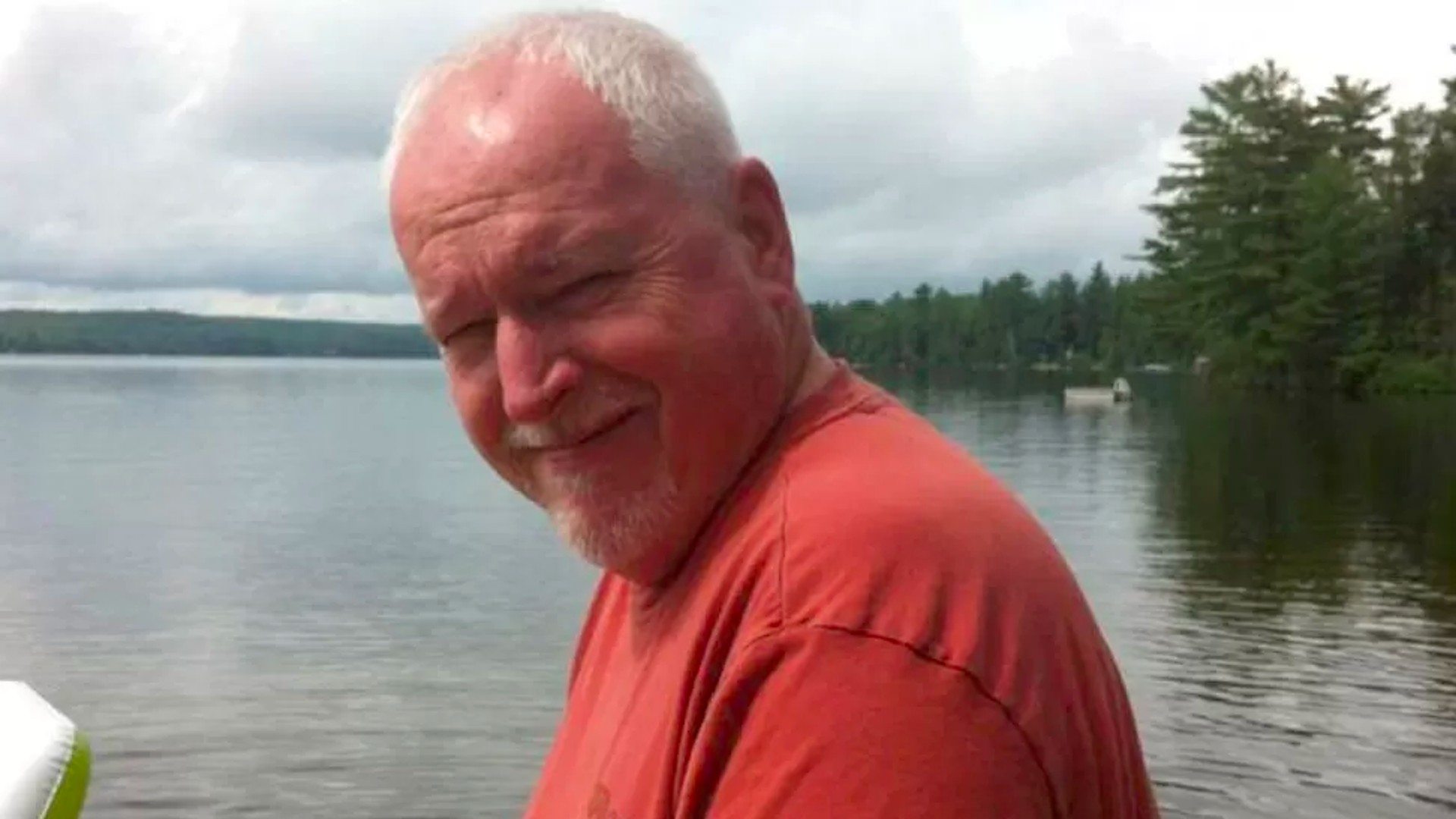
For years, men were disappearing from and around Toronto’s Gay Village.
Friends, relatives and members of the LGBTQ+ community noticed.
They searched for missing loved ones, put up posters and asked whether the disappearances could be connected.
Eventually, one of the darkest chapters in Toronto’s LGBTQ+ history came into view.
Toronto landscaper Bruce McArthur murdered eight men between 2010 and 2017. Several of the victims had connections to Toronto’s Church-Wellesley neighborhood, commonly known as the Gay Village.
In January 2019, McArthur pleaded guilty to eight counts of first-degree murder. The following month, he received eight concurrent life sentences and became eligible to apply for parole only after serving 25 years.
But this story should not be remembered only because of the man responsible.
It is also the story of eight victims, their families and friends, Toronto’s LGBTQ+ community, and difficult questions about what happens when people from marginalized communities disappear.
The Eight Men Murdered by Bruce McArthur
The eight victims were:
- Skandaraj Navaratnam
- Abdulbasir Faizi
- Majeed Kayhan
- Soroush Mahmudi
- Dean Lisowick
- Kirushna Kanagaratnam
- Selim Esen
- Andrew Kinsman
They came from different backgrounds and lived very different lives.
Several were immigrants or racialized men. Some had strong connections to Toronto’s LGBTQ+ community. One experienced housing instability. Some had family members who knew relatively little about parts of their personal lives.
Remembering those differences is important.
Calling this simply a story about a “gay serial killer” can erase much of what made the victims vulnerable and why the case affected Toronto so deeply.
Skandaraj Navaratnam
Skandaraj Navaratnam, often known as Skanda, was 40 years old.
He disappeared in 2010.
His disappearance later became one of the cases investigated through Project Houston, a Toronto police investigation into missing men who had connections to Toronto’s Gay Village.
Abdulbasir Faizi
Abdulbasir “Basir” Faizi was 42.
His family reported him missing in December 2010.
His vehicle was later located in Toronto, and investigators determined that he had been in the area around the Gay Village before disappearing.
His case also became part of Project Houston.

Majeed Kayhan
Majeed “Hamid” Kayhan was 58.
He disappeared in 2012 and was reported missing by his son.
His disappearance became the third major case investigated as part of Project Houston.
The investigation ran for approximately two years but ended without establishing what had happened to the missing men.
Soroush Mahmudi
Soroush Mahmudi was 50.
He disappeared in 2015.
His family reported him missing after he failed to return home.
Years later, investigators established that he was another of McArthur’s victims.
Dean Lisowick
Dean Lisowick was in his 40s when he was killed.
His case is particularly important because he was never formally reported missing.
Lisowick had experienced housing instability and had used Toronto’s shelter system.
His story shows how easily someone without stable housing or a large network of relatives and friends looking for them can disappear without immediately attracting widespread attention.
Kirushna Kanagaratnam
Kirushna Kanagaratnam was 37 and originally from Sri Lanka.
He had come to Canada but was never formally reported missing.
For a time, investigators did not even know his identity.
Police eventually released an edited photograph to the public in an attempt to identify him. Information eventually helped authorities establish who he was.
His case is also a reminder that not every victim had the same obvious connection to Toronto’s LGBTQ+ community.

Selim Esen
Selim Esen was 44.
He disappeared in April 2017 from the area around Toronto’s Gay Village.
His disappearance became part of a new investigation called Project Prism.
The investigation would eventually become an important part of the case against McArthur.
Andrew Kinsman
Andrew Kinsman was 49.
He disappeared in June 2017.
Friends became concerned almost immediately when they could not locate him.
Kinsman was well known within Toronto’s LGBTQ+ community, and friends organized searches and distributed missing-person posters.
His disappearance became part of Project Prism and ultimately helped investigators focus their attention on McArthur.
Toronto’s LGBTQ+ Community Had Been Asking Questions
One of the most troubling aspects of this case is that members of Toronto’s LGBTQ+ community had been worried about missing men for years.
People noticed a pattern.
Men were disappearing.
Several had connections to the same neighborhood and community.
Friends and community members questioned whether the cases could be connected.
Those concerns became especially important after McArthur’s arrest confirmed that multiple disappearances really were related.
The case created lasting questions about whether authorities sufficiently listened to concerns raised by people living and working within Toronto’s LGBTQ+ community.
Project Houston
Toronto police established Project Houston in 2012.
The investigation focused on the disappearances of Skandaraj Navaratnam, Abdulbasir Faizi and Majeed Kayhan.
Investigators spent thousands of hours looking at the cases, interviewing witnesses and following leads.
However, Project Houston ended in 2014 without solving the disappearances.
Years later, all three men were identified as victims of McArthur.

Project Prism
A new investigation called Project Prism began in 2017 following the disappearances of Selim Esen and Andrew Kinsman.
Investigators eventually identified McArthur as a suspect.
He was arrested in January 2018.
The investigation quickly expanded as police searched properties associated with his landscaping work and examined possible connections to other missing men.
What initially appeared to involve a smaller number of disappearances eventually became an investigation involving eight murder victims.
McArthur Pleaded Guilty to Eight Murders
On January 29, 2019, Bruce McArthur pleaded guilty to eight counts of first-degree murder.
The guilty plea prevented the case from proceeding to a lengthy trial.
On February 8, 2019, he received eight concurrent life sentences.
Under the sentence, McArthur cannot apply for parole until he has served 25 years.
The judge noted the enormous damage the murders caused not only to relatives and friends of the victims but also to Toronto’s LGBTQ+ community.
The Missing and Missed Review
The McArthur case eventually resulted in a much wider examination of how Toronto police investigate missing people.
An independent civilian review led by former Ontario Court of Appeal Justice Gloria Epstein examined missing-person investigations, particularly those involving LGBTQ+ people and other vulnerable or marginalized communities.
The final report, called Missing and Missed, was released in 2021.
It contained 151 recommendations dealing with police policies, training, missing-person procedures, accountability and relationships with marginalized communities.
Toronto Police Service and the Toronto Police Services Board accepted the recommendations and committed to implementing them.
As of the end of 2025, Toronto Police reported that 95 of the 151 recommendations had been implemented, with most of the remaining recommendations still in progress.
That means the impact of this case continues well beyond the criminal prosecution.
Why Race and Immigration Matter in This Story
Many discussions about McArthur focus on Toronto’s gay community.
That connection is important, but it is not the complete story.
Several victims were immigrants or racialized men.
Some may have lived within communities where discussing sexuality openly could be difficult.
LGBTQ+ immigrants can sometimes face overlapping concerns involving sexuality, family expectations, immigration status, cultural stigma and distrust of authorities.
Someone may be openly gay with friends but not with family.
Someone may have come from a country where homosexuality is criminalized.
Others may have reasons to avoid contact with authorities.
These circumstances can make missing-person investigations more complicated.
They should never make someone’s disappearance less important.

Why Dean Lisowick’s Story Matters
Dean Lisowick’s case deserves particular attention.
He was not formally reported missing.
People experiencing homelessness or housing insecurity may not have someone who immediately realizes that they are gone.
There may be no employer asking why they missed work.
There may be no partner calling police.
There may be no relative nearby who knows their daily routine.
That creates a dangerous gap.
A person’s life does not become less valuable because they are homeless, estranged from family or living outside traditional social structures.
Trust Between Police and LGBTQ+ Communities
The McArthur investigation reopened a longstanding conversation about trust between LGBTQ+ communities and law enforcement.
Toronto has one of Canada’s largest LGBTQ+ populations and a highly visible queer neighborhood.
But historically, relationships between police and LGBTQ+ residents have often been complicated.
Older LGBTQ+ residents may remember police raids on gay spaces and decades when homosexuality was heavily stigmatized.
For immigrants, transgender people, sex workers, homeless people and racialized LGBTQ+ people, those concerns may overlap with additional distrust of authorities.
That is why community relationships matter.
A missing-person investigation may depend on information from friends, partners, bar employees, neighbors or people who knew someone socially but were not members of their immediate family.
Those people need to believe that contacting authorities will help rather than create additional problems.
More Than a True-Crime Story
There is a temptation to treat cases like this as entertainment.
True-crime stories often spend enormous amounts of time examining the killer.
What did he do?
How did he avoid detection?
What was found during searches?
Those questions may be relevant, but focusing almost entirely on the murderer can turn victims into background characters in their own stories.
For an LGBTQ+ publication, the more important perspective is different.
Who were the people who disappeared?
Why did their friends become worried?
Why were some never formally reported missing?
What barriers existed between vulnerable communities and authorities?
And what changed after the truth became known?
Those questions are more useful than repeatedly sensationalizing the crimes themselves.
Remember Their Names
The name Bruce McArthur became internationally recognizable.
The eight men he murdered deserve to be remembered as well.
Skandaraj Navaratnam.
Abdulbasir Faizi.
Majeed Kayhan.
Soroush Mahmudi.
Dean Lisowick.
Kirushna Kanagaratnam.
Selim Esen.
Andrew Kinsman.
Eight different people.
Eight different histories.
Eight circles of relatives, friends and community members affected by their deaths.
The McArthur case remains an important chapter in Canadian LGBTQ+ history because it is about much more than one murderer.
It is about visibility, community, trust, immigration, race, housing insecurity and what can happen when vulnerable people disappear without receiving enough attention.
Most importantly, it is a reminder that marginalized people should never become missing and missed.

Frequently Asked Questions
Who is Bruce McArthur?
Bruce McArthur is a former Toronto landscaper who pleaded guilty in 2019 to murdering eight men between 2010 and 2017.
How many people did Bruce McArthur murder?
McArthur pleaded guilty to eight counts of first-degree murder.
Were all of Bruce McArthur’s victims gay?
Several victims were gay or had connections to Toronto’s LGBTQ+ community and Gay Village, but it is not accurate to automatically describe every victim as gay. The victims had different backgrounds and circumstances.
Where is Toronto’s Gay Village?
Toronto’s Gay Village is centered around the Church and Wellesley area of downtown Toronto. It has long been home to LGBTQ+ businesses, nightlife, organizations and community spaces.
What was Project Houston?
Project Houston was a Toronto police investigation launched in 2012 into the disappearances of Skandaraj Navaratnam, Abdulbasir Faizi and Majeed Kayhan.
What was Project Prism?
Project Prism was a later missing-person investigation launched in 2017 following additional disappearances, including Selim Esen and Andrew Kinsman. The investigation eventually led police toward McArthur.
What is the Missing and Missed report?
Missing and Missed is the independent review examining how Toronto Police handled missing-person investigations, particularly cases affecting LGBTQ+ and marginalized communities. It produced 151 recommendations.
Is Bruce McArthur still in prison?
McArthur received life sentences for the eight murders. His sentence made him ineligible to apply for parole for 25 years from his 2019 sentencing.
Sources
- CBC News — Bruce McArthur: What We Know
https://www.cbc.ca/news/canada/toronto/bruce-mcarthur-what-we-know-1.4509436 - CityNews Toronto — McArthur Sentenced to Life With No Chance of Parole for 25 Years
https://toronto.citynews.ca/2019/02/08/bruce-mcarthur-sentencing/ - Toronto Police Service — Missing and Missed Implementation
https://www.tps.ca/chief/chiefs-office/missing-and-missed-implementation/
Recommended
- These Gay Voters Backed Trump. Here’s the Uncomfortable Truth
- Gay Games Valencia Opens With Celebration and Controversy
- Chechen Security Forces Forcibly Send Detained Gay Men to War in Ukraine
- The First National March on Washington for Lesbian and Gay Rights (1979): A Turning Point in LGBTQ+ History
- Gay Cruising Spots in Las Vegas, NV
- What Do You Call a Gay Dinosaur?
More Recommended
How Gay-Owned Brands are Promoting Inclusivity in Advertising
Reaching the LGBTQ+ Market: How Gay-Owned Brands are Promoting Inclusivity in Advertising In today’s ever-evolving [...]
SEO Strategies to Reach Gay Audiences Around the World
SEO Strategies to Reach Gay Audiences Around the World – In today’s digital age, it’s [...]
What Are the Best Gay History Books?
What Are the Best Gay History Books? – Delving into the vibrant tapestry of LGBTQ+ [...]
Lesbian Visibility in Advertising: Why Representation Matters
Lesbian Visibility in Advertising: Why Representation Matters In today’s world, it is more important than [...]
What Is Gay Conversion Therapy?
A Deep Dive into Its Origins, Practices, and Harmful Impact – What Is Gay Conversion [...]
Top Lesbian Podcasts You’ll Love in 2025
Top Lesbian Podcasts You’ll Love in 2025 – In 2025, the world of lesbian podcasts [...]
Why Target’s Pro-LGBT Stance Is Good for Business and Good for the Community
Why Target’s Pro-LGBT Stance Is Good for Business and Good for the Community – to [...]
Marketing and Advertising to Lesbians
Marketing and Advertising to Lesbians – Marketing to any audience requires a deep understanding of [...]
Lesbian Loyalty: How Target is Winning Hearts and Wallets
Lesbian Loyalty: How Target is Winning Hearts and Wallets In today’s competitive market, it’s essential [...]